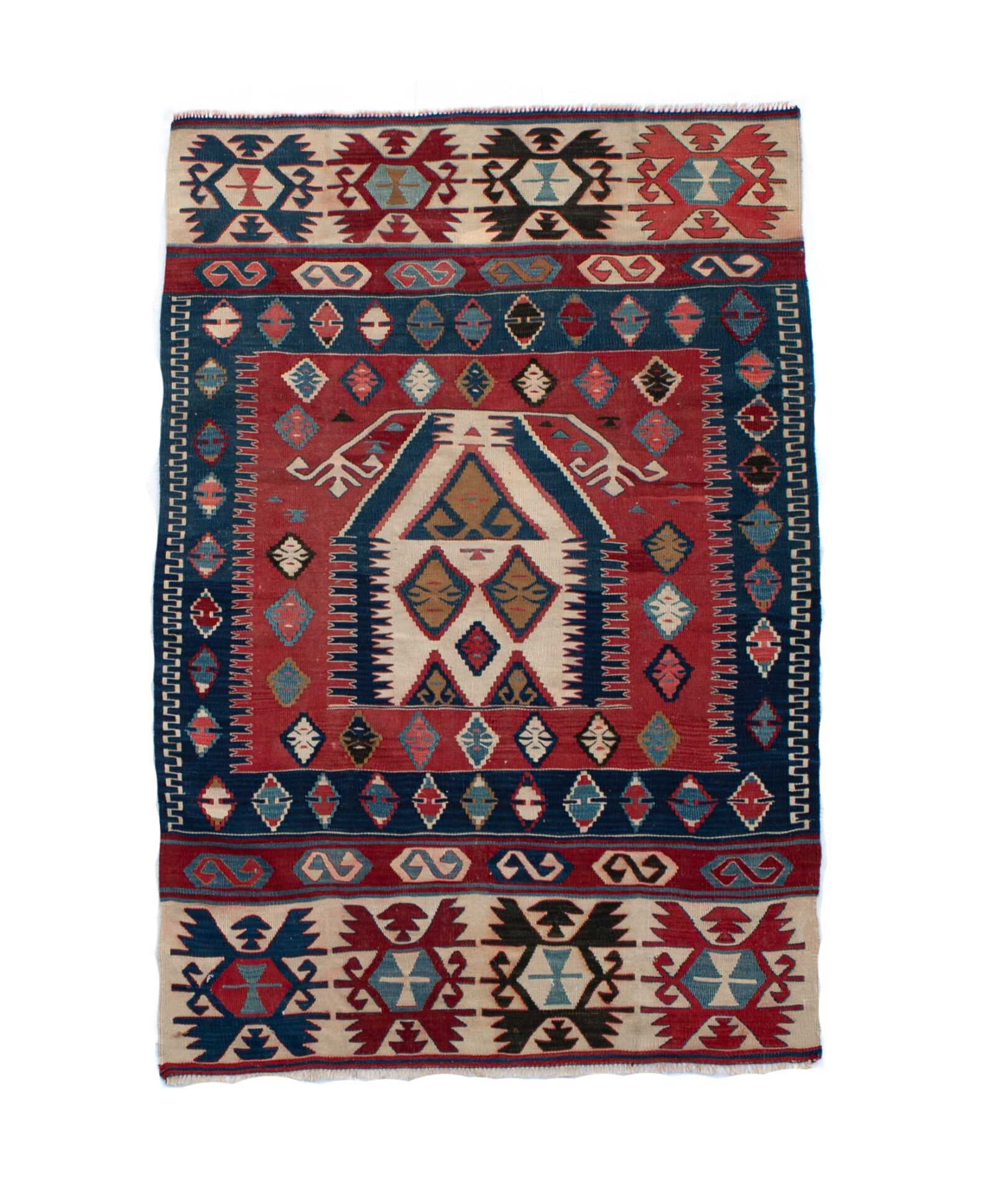
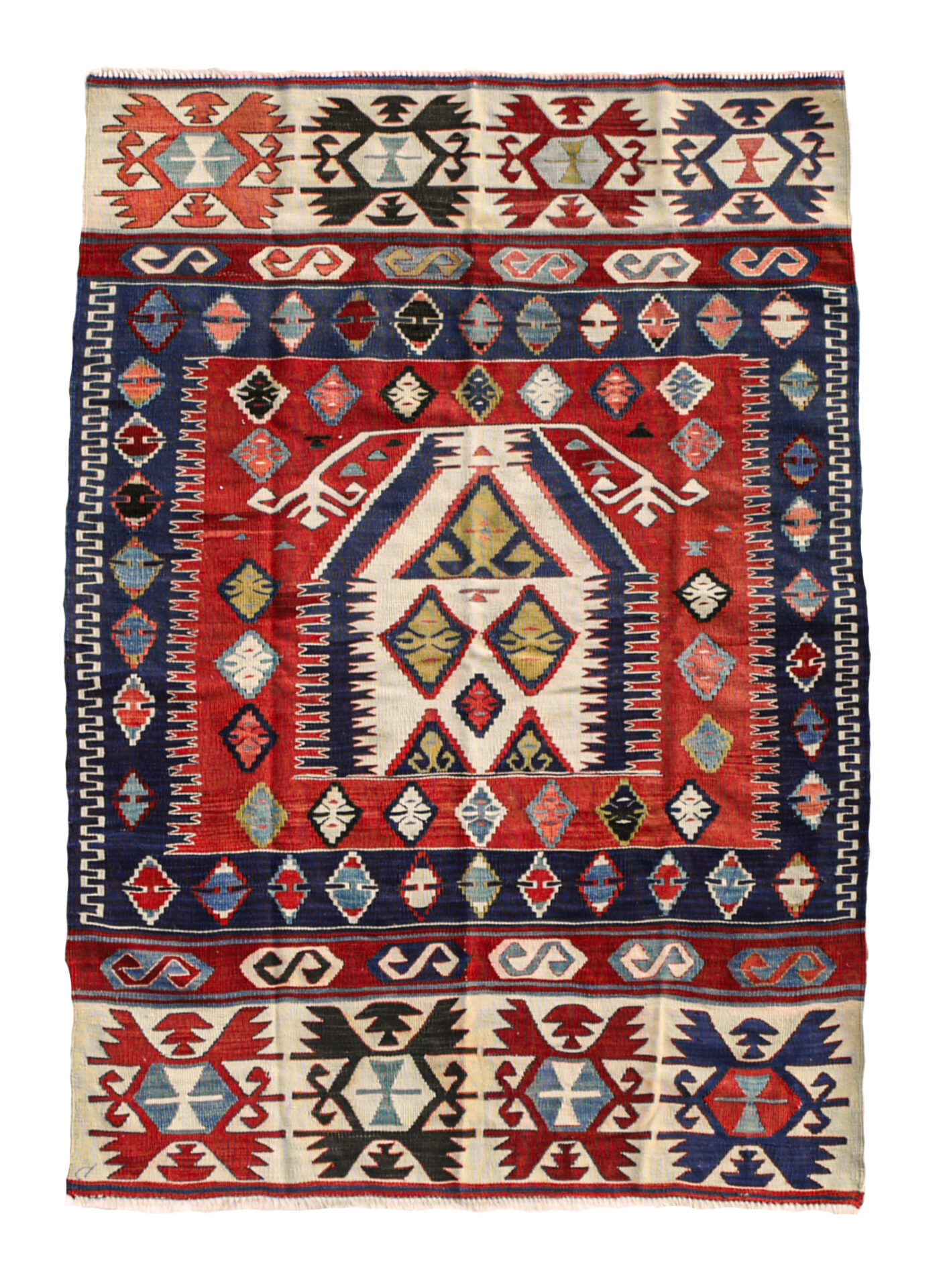
Description
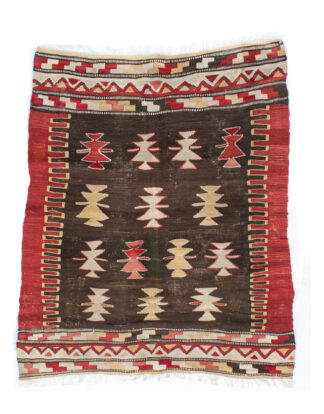
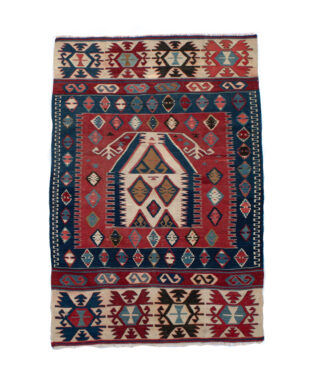
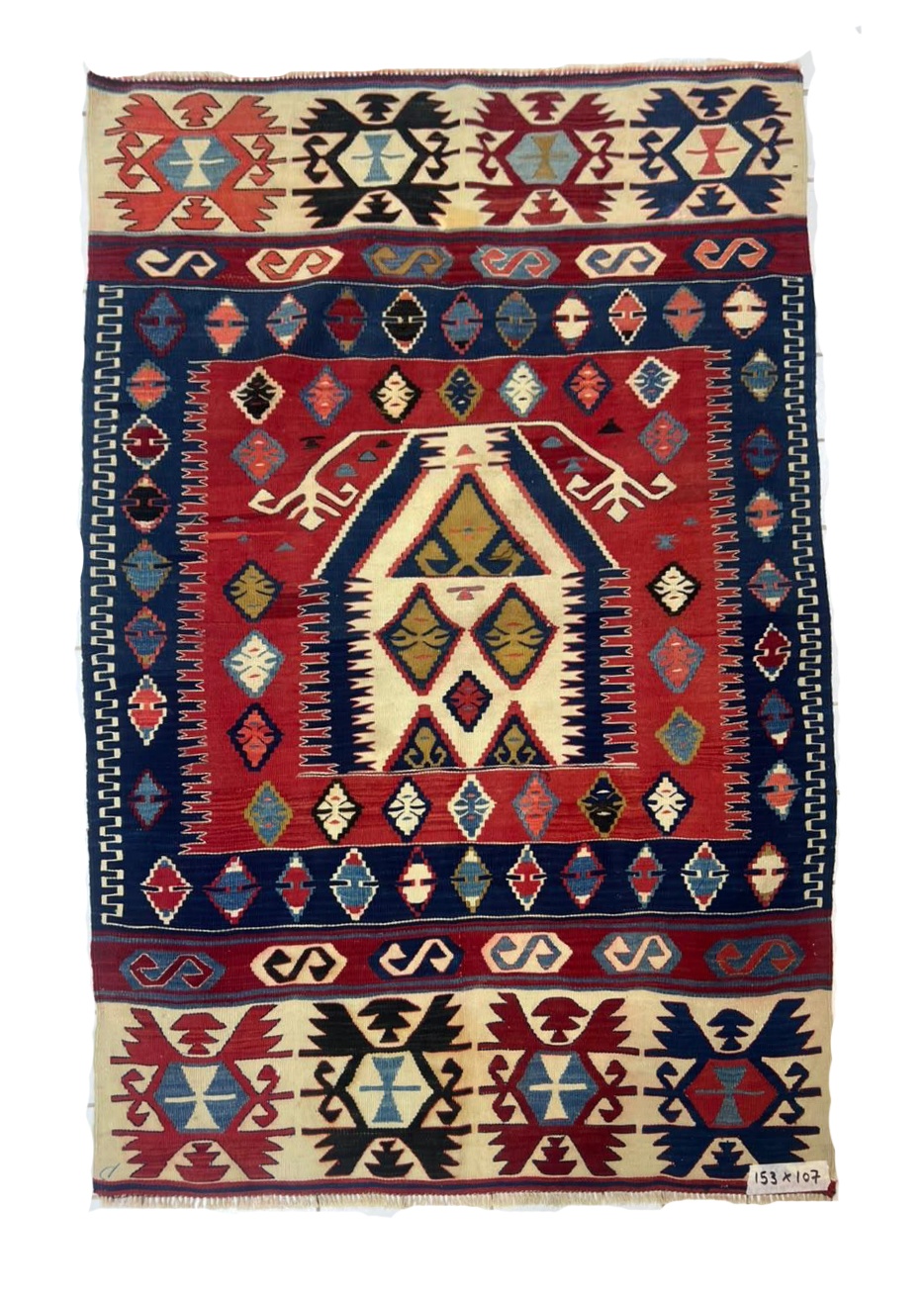
The kilim attribution reveals some of the continuing confusion surrounding the regional classification of later nineteenth-century Anatolian kilims. Certain elements—particularly the border system and the treatment of the broad end panels—suggest contact with Western Anatolian weaving traditions, and some observers have consequently proposed a connection with the Bergama area. Michael Papadopoulos likewise recognizes a degree of Western Anatolian influence, principally in the borders, but places the kilim firmly within the broader Konya tradition. This attribution appears the most convincing: the compact organization of the central design, enclosed by successive red and dark-blue fields, remains fundamentally Central Anatolian in character. The related example illustrated on the left was catalogued differently by Bonhams, demonstrating how uncertain—and sometimes rather casual—auction-house attributions of Anatolian flatweaves can be. “Konya,” however, should be understood here as a broad regional and stylistic designation rather than as evidence of manufacture in a particular village.